
.
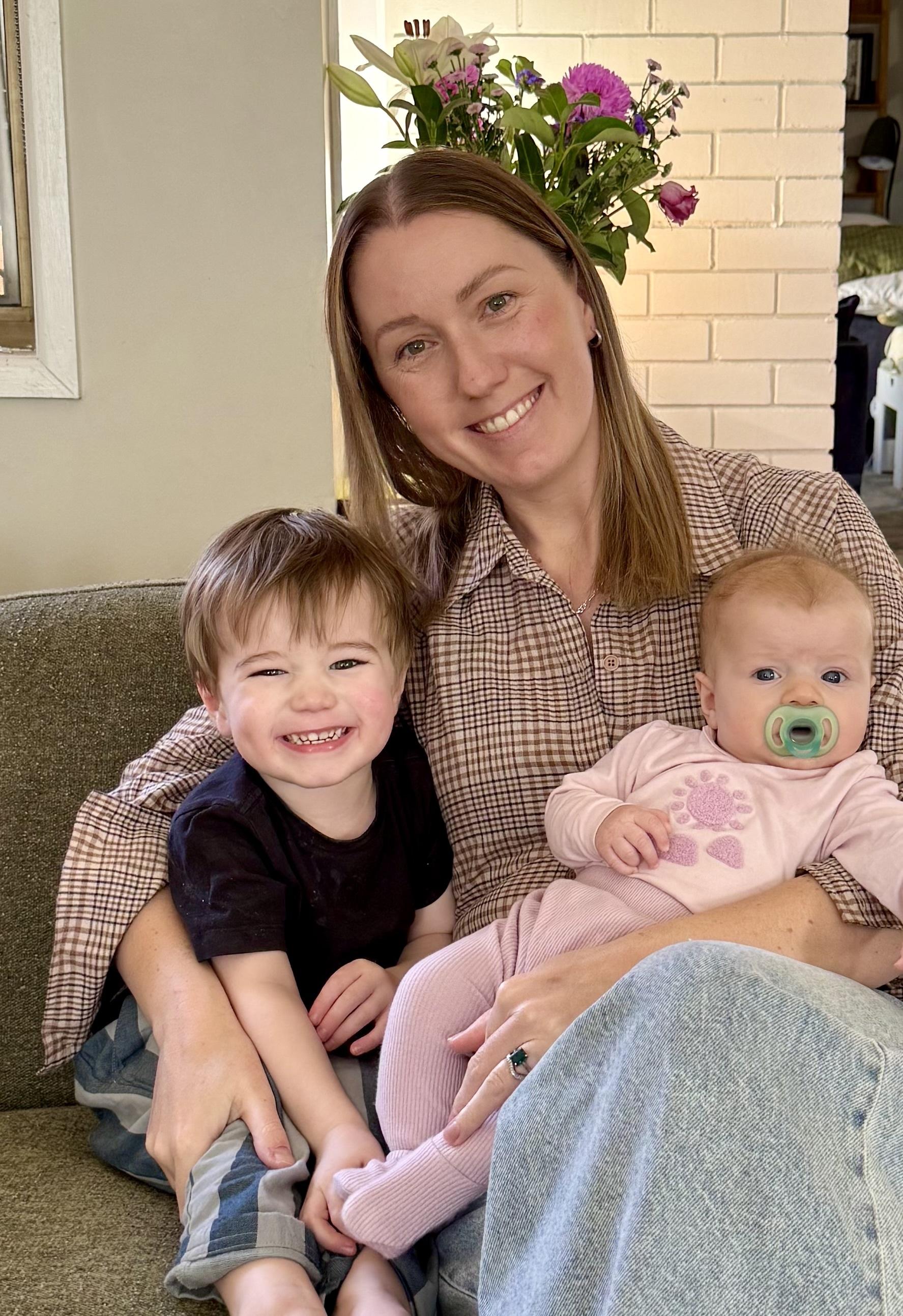
Sarah Rose, General Manager, People, Brand & Communications at Paynters
‘I wasn’t the same person’
Sarah Rose, General Manager, People, Brand & Communications at Paynters, plays a lead role in how her construction company looks after its people through pregnancy, parental leave and return. She is currently on her second parental leave, caring for a toddler and a four-month-old, experiencing firsthand the culture she has helped create.
As a leader in her organisation, Sarah Rose has spent a lot of time thinking about other people’s parental leave. The conversation before someone goes. The way a team navigates the absence. What it takes for a woman to come back, and stay.
This year, Sarah is the one on parental leave. Her daughter is nearly four months old. The thing she helps build for everyone else, she is now experiencing firsthand.
The morning we speak, it is ten degrees in Brisbane. There has just been a twenty-minute standoff with her first born, her three-year-old, about whether he will wear a jumper. After some skilled negotiation, he wears the jumper.
Mondays are the reset day, she says, the one for putting the week back together after the weekend. By mid-morning there has already been a feed, some tummy time, and a baby rocked slowly down for a nap. There has also been work. While she is away, Sarah is still doing her team’s performance reviews herself, writing up their responses between feeds, a baby on her chest, her people on her mind. ‘My life feels a little chaotic these last few weeks. But we are managing.’
None of it was the plan. After school there was a gap year, a business degree, then an admin job taken to pay for the next trip, and it just happened to be in construction. The marketing manager who hired her became an early mentor, and somewhere in that first stretch, Sarah fell in love with the work and the industry. So, she stayed: a marketing-and-bids role she loved for its pace, a stint managing at an architecture firm in London, then home to Paynters, where she has risen the ranks to became one of its five general managers. A job taken to fund her travels has become a career she is proud of.
Sarah remembers telling the leadership team she was pregnant the first time. She was nervous. She was also, in her words, ‘incredibly nauseous’, which certainly didn’t make the conversation any easier. She had not been on the team long. She was the youngest in the room, and the only woman.
‘I was already dealing with a fair bit of imposter syndrome,’ she says, ‘questioning whether I truly deserved a seat at the table.’ Telling work she was pregnant felt like one more hurdle. One more thing to prove herself against.
Second time around, Sarah feels differently. Becoming a parent, she says, has not diminished what she brings as a leader; it has strengthened it. But at the time she felt the pressure so many women carry into that same conversation: wondering whether a milestone in her personal life would change how others saw her at work.
After Sarah returned from parental leave the first time, there was a meeting she has never forgotten. She was having a coffee with a team member when a call came through: she was needed, urgently. She rushed in without time to grab a laptop, or even a notebook.
Sarah could see why they had called her in. The team was brainstorming, and these were the rooms she had always been good in; Sarah has a knack for connecting the dots and leaving with a clear plan. But this time she sat there, listening, and her brain just wouldn’t do what it had always done. After seven months of broken sleep, she realised in that moment that she just wasn’t operating at full capacity.
Sarah left the meeting full of self-doubt. And no notes.
As she walked out, a colleague stopped her. He had a young child of his own. ‘Hey, I took some notes for you. I’ll email them through.’ He had recognised the exhaustion and overwhelm. ‘He probably doesn’t remember doing that for me,’ she says. ‘But I’ve never forgotten it.’ A small thing, at a moment she needed it, and a reminder of how much understanding can do for a parent finding their way back to work.
The hardest part of coming back, she says, was realising she was not the same person she had been before, and feeling comfortable in her own rhythm again would take time.
Sarah has let go of an idea she used to hold about balance. She thought it meant peace, calm, everything under control. The reality of motherhood and work, she says, is far from that, so she has stopped chasing perfect, and tries to be present in whichever role she is in at the time.
She books her one-on-ones in the morning, when she is sharpest. On a day when she can tell there will be nothing left to give by bedtime, she taps in her husband and puts what she has into a better start the next morning. ‘I tend to choose regulation over rigidity,’ she says, ‘both as a mum and as a leader, recognising that some days won’t go to plan, and that’s okay.’
Sarah is, by her own account, an open book when the tank is running low; pretending otherwise, she has learned, serves no one. She has grown more open about the harder parts too, so the women coming behind her feel less pressure to hold it all together.
She keeps the small kindnesses close. The colleague who sends the encouraging text and checks in right when it is needed. The one who turned up with a big box of clothes after her own boys had grown out of them; a practical thing that made a world of difference, which Sarah now pays forward.
And the friend at a recent lunch, when Sarah’s baby daughter is crying and can’t settle. While Sarah rocks and feeds her, the friend reaches over and cuts up Sarah’s lunch, so she can eat with one hand.
Before she went on leave this time, her Chief Executive sat her down and asked a handful of simple questions. What would this period look like for her? How could the business best support her? Did she want to stay in the loop, or switch off completely? Were there events or conversations she wanted to stay close to, and others she was happy to miss?
Those questions matter, she says, because there is no one-size-fits-all. What is right for her, for another woman might be the opposite, which is exactly why you cannot assume.
‘Sometimes the challenges are because we haven’t asked the right questions, or we’ve made assumptions about what someone wants, perhaps even assuming they won’t return’, she says.
Ask Sarah where the industry is still getting it wrong for parents, for mothers especially, and she doesn’t search for someone to blame. She names a habit. Construction celebrates resilience, she says, but it still sometimes mistakes commitment for visibility: ‘a parent leaving for daycare pickup can be just as committed and high-performing as someone staying late in the office.’
She remembers, years ago, finding a team member crying. The woman had taken time off to care for a sick child, then come in unwell herself, frightened of letting the team down after already being away. We have all been there, Sarah says. It is the kind of moment that decides the kind of leader you want to be.
What she loves is the opposite of all that: more men showing up for their families in ways once asked mostly of women. When she watches male colleagues stop past the office with a little one on their hip, because they are the parent on the sick day this time, she feels hopeful the industry is changing.
Similarly, Sarah values equal caring responsibilities at home. Her husband is a project manager in the same industry, and between them, drop-offs, pick-ups and sick days are 50/50, which means she is not always the one putting her career on hold. This isn’t something she takes for granted and recognises not every woman has this experience.
Her kids are growing up while she does this work. She wants them to grow up seeing an industry where talent and ambition aren’t capped by gender, life stage, or family. Where flexibility is a way to keep good people, not a favour to be asked for, and where construction is seen for what she believes it is: rewarding, respected, worth building a life in. Getting it right, she says, starts before leave even begins: one honest conversation, no assumptions, and the grace to let the plan change when parenthood does what it always does.
In the end she makes it sound smaller than any policy. The invitation that still arrives. The update still shared. The milestone still marked. The unhurried coffee. A colleague noticing you walked out without your notes and making sure you get them anyway.
Sounds small, but really, is might be what matters most, ‘it’s about still feeling valued as part of the team’.